Stay the Course: Why Long-Term Investors Don’t Panic During Market Volatility
Market crashes and rallies trigger emotional decisions. Smart investors stick to diversified ETF strategies, ignore short-term noise and stay invested for the long run.

Market crashes and rallies trigger emotional decisions. Smart investors stick to diversified ETF strategies, ignore short-term noise and stay invested for the long run.
Dollar-cost averaging (DCA) is one of the most widely used investment strategies in Canada. It reduces emotional decision-making and spreads entry risk—but does it actually outperform lump-sum investing? Here’s what the data and real-world behaviour suggest.
Cryptocurrency has delivered dramatic gains—and equally dramatic collapses. For long-term Canadian investors focused on stability, diversification and wealth preservation, the risk profile looks very different from the marketing narrative.
Tariffs and trade tensions can create short-term volatility—but for diversified, long-term investors, they rarely justify drastic portfolio changes. Here’s how to think about trade policy risk rationally.
Gold does not produce income or dividends, but it can serve a strategic role in a diversified portfolio. Here’s how Canadian investors should think about gold, inflation and long-term asset allocation.
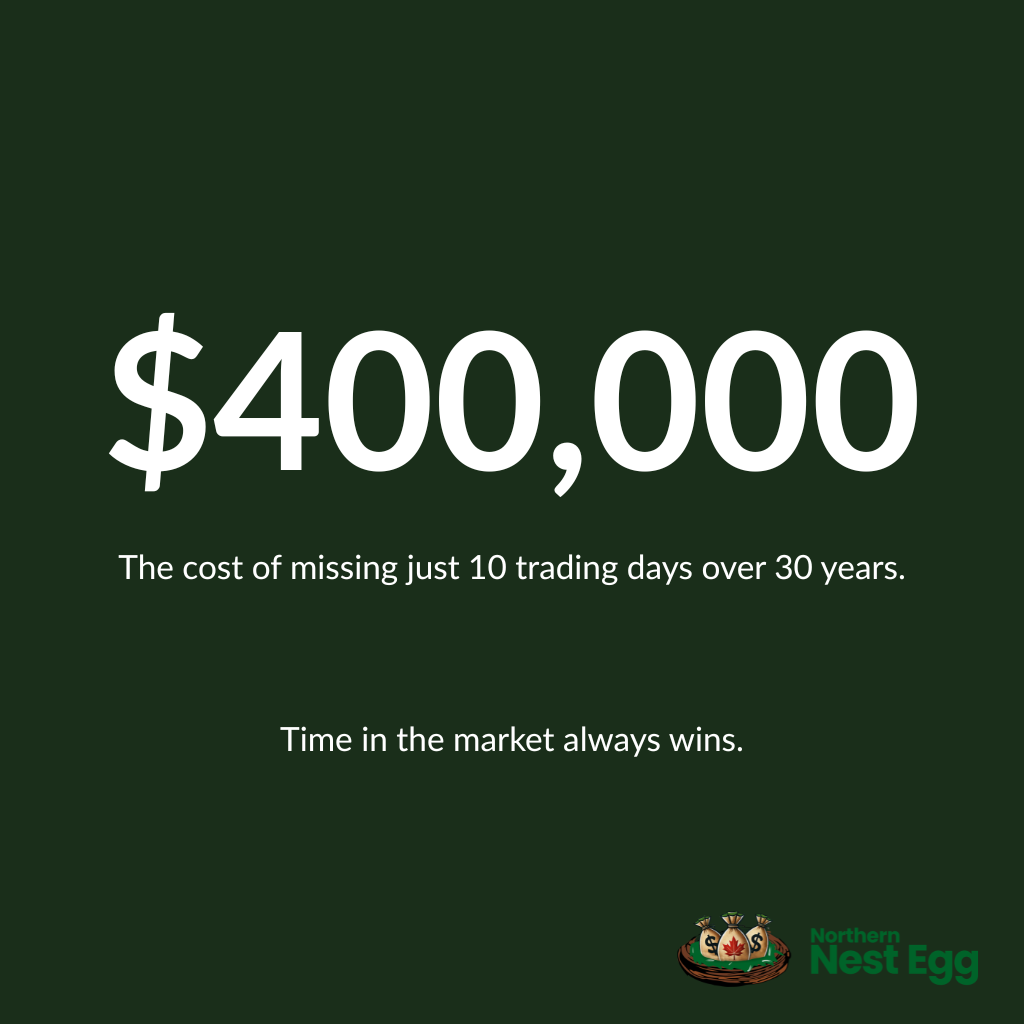
Trying to time the market requires getting two decisions right in sequence: when to exit and when to re-enter. Most investors get at least one wrong. Here is why staying invested in low-cost index ETFs consistently produces better long-term outcomes—and what the data actually shows.