How To Build A Canadian Core ETF Portfolio
You don’t need a financial advisor, a complicated spreadsheet or a finance degree to build a solid investment portfolio. You need a clear plan, the right tools and the discipline to follow through.
Your portfolio is not your biggest risk. Your reaction to it might be.
Market downturns are not the exception. They are the price of admission for long-term growth.
Building your RRSP is only half the strategy. How you withdraw it can determine how much of it you actually keep.
The RRSP contribution deadline is one of the most important tax planning dates on the Canadian calendar. Used properly, it can reduce your taxable income and potentially generate a meaningful tax refund.
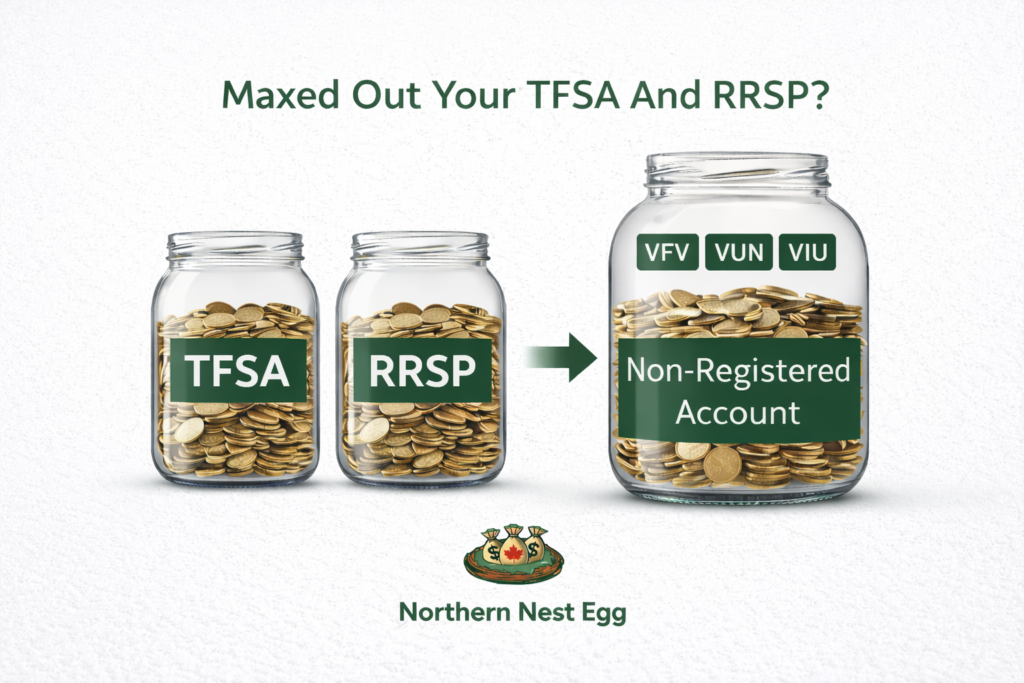
Once your TFSA and RRSP are fully funded, the next logical step is a taxable brokerage account. The strategy is not complicated—but the tax details matter.
You don’t need a financial advisor, a complicated spreadsheet or a finance degree to build a solid investment portfolio. You need a clear plan, the right tools and the discipline to follow through.
Your portfolio is not your biggest risk. Your reaction to it might be.
Market downturns are not the exception. They are the price of admission for long-term growth.
Building your RRSP is only half the strategy. How you withdraw it can determine how much of it you actually keep.
The RRSP contribution deadline is one of the most important tax planning dates on the Canadian calendar. Used properly, it can reduce your taxable income and potentially generate a meaningful tax refund.
Once your TFSA and RRSP are fully funded, the next logical step is a taxable brokerage account. The strategy is not complicated—but the tax details matter.

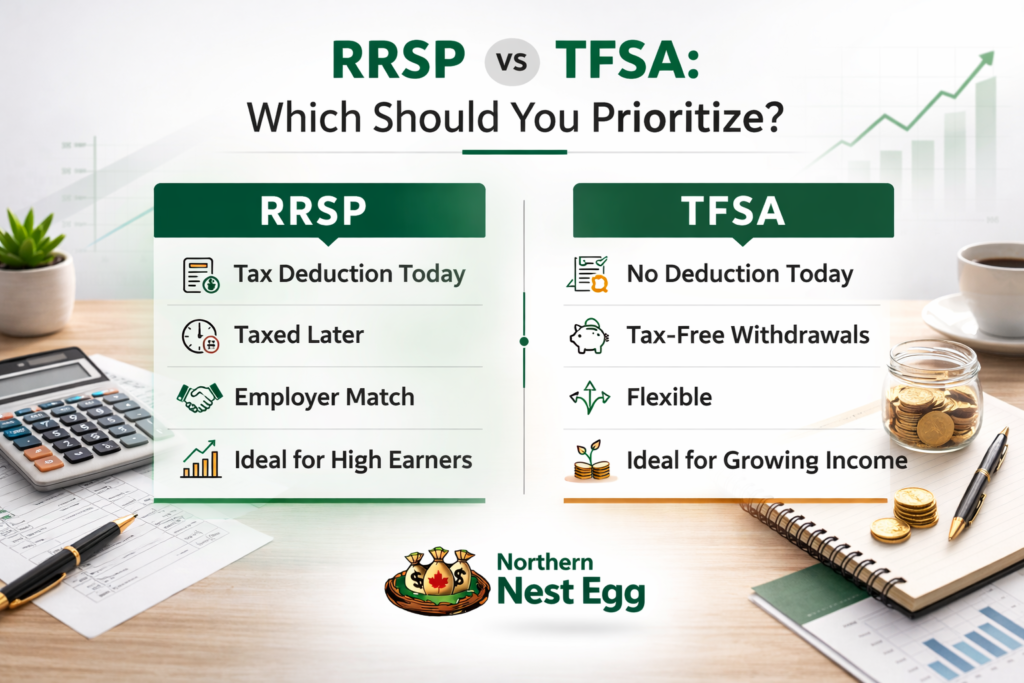
If you can only invest in one account right now, which should it be: RRSP or TFSA? The answer depends on your tax rate today versus your tax rate later.
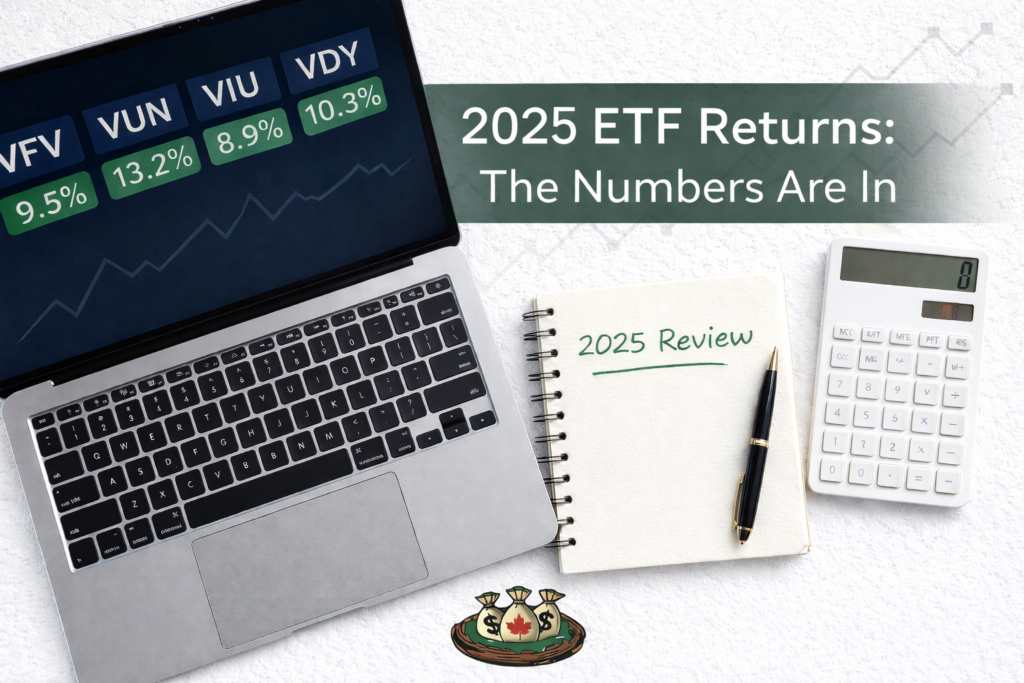
A data-driven review of 2025 total returns for Canada’s most popular all-in-one ETFs—and what the results mean for long-term DIY investors.
Came into money? Here’s how to make smart, deliberate choices instead of emotional ones.
Rising costs, layoffs and high interest rates make an emergency fund more important than ever. Here’s the deal: You don’t need perfection. You need preparation.
Frugal living isn’t about deprivation. It’s about spending intentionally so you can save more, invest consistently and build financial freedom over time.
Bonds may not be exciting, but they reduce volatility, preserve capital and play a critical role in long-term portfolio construction. Here’s why fixed income still deserves a place in your strategy.
Market crashes and rallies trigger emotional decisions. Smart investors stick to diversified ETF strategies, ignore short-term noise and stay invested for the long run.
Stock picking feels smart, exciting and personal. For most investors, it is also the fastest way to add risk, fees and regret without improving long-term returns. A diversified broad market ETF portfolio is usually the better bet.
An Excelerator Deposit Option (EDO) allows policyholders to contribute additional funds into certain permanent life insurance policies to accelerate cash value growth. But like any financial tool, it should be evaluated carefully within a broader plan.
Dollar-cost averaging (DCA) is one of the most widely used investment strategies in Canada. It reduces emotional decision-making and spreads entry risk—but does it actually outperform lump-sum investing? Here’s what the data and real-world behaviour suggest.
Cryptocurrency has delivered dramatic gains—and equally dramatic collapses. For long-term Canadian investors focused on stability, diversification and wealth preservation, the risk profile looks very different from the marketing narrative.
Tax season does not have to be stressful. With proper preparation and a clear understanding of deductions, credits and deadlines, Canadian taxpayers can file efficiently while keeping more of their money working for them.
From emergency funds to RESPs and retirement planning, young families face competing financial priorities. Here’s how to build stability today while protecting long-term wealth.
Retirement investing should not be about maximizing income at all costs. A total-return approach—using diversified, low-cost ETFs and strategic withdrawals—often leads to more stability, better tax control and stronger long-term outcomes for Canadian retirees.
Investment fees may look small on paper—but over decades, they quietly compound against you. Here’s how cutting costs through low-fee ETFs can dramatically increase long-term wealth for Canadian investors.
Robo-advisors promise low fees, automation and simplicity. But how do they compare to managing your own low-cost ETF portfolio over the long term? Here’s a clear-eyed look at the trade-offs for Canadian investors.
Retirement planning does not require extreme savings rates or perfect timing. The Rule Of 30 offers a realistic framework for balancing housing, short-term expenses and long-term investing—while smart tax and investment decisions strengthen the outcome.
Focusing heavily on Canadian equities may feel intuitive—but does it make sense from a diversification and long-term growth perspective? Here’s what Canadian investors should consider before building a nationalistic portfolio.
Tariffs and trade tensions can create short-term volatility—but for diversified, long-term investors, they rarely justify drastic portfolio changes. Here’s how to think about trade policy risk rationally.
Talking to your kids about money does not have to be awkward or overwhelming. With the right approach, Canadian parents can build strong financial habits early—long before allowances and bank accounts become serious decisions.
An RESP helps Canadian families save for post-secondary education with tax-deferred growth and government grants like the CESG. Here’s how it works, how withdrawals are taxed and how to invest inside one effectively.
A LIRA (Locked-In Retirement Account) holds pension funds transferred from a former employer. Unlike an RRSP, it is governed by pension legislation and comes with strict withdrawal rules. Here’s what Canadian investors need to know.
Index investing has consistently delivered strong long-term results at low cost. Here’s why broad-market ETFs and all-in-one funds remain one of the most effective wealth-building strategies for Canadians.
Gold does not produce income or dividends, but it can serve a strategic role in a diversified portfolio. Here’s how Canadian investors should think about gold, inflation and long-term asset allocation.
Your portfolio’s asset allocation is the most important driver of its long-term performance. But markets drift—and without rebalancing, your risk exposure quietly shifts away from the plan you built. Here is how Canadian investors can rebalance strategically, without overtrading or reacting emotionally.
Market declines feel like emergencies. For long-term investors with a sound strategy and a diversified portfolio, they rarely are. Here is why staying invested through volatility—rather than stepping aside—is one of the most powerful wealth-building decisions a Canadian investor can make.
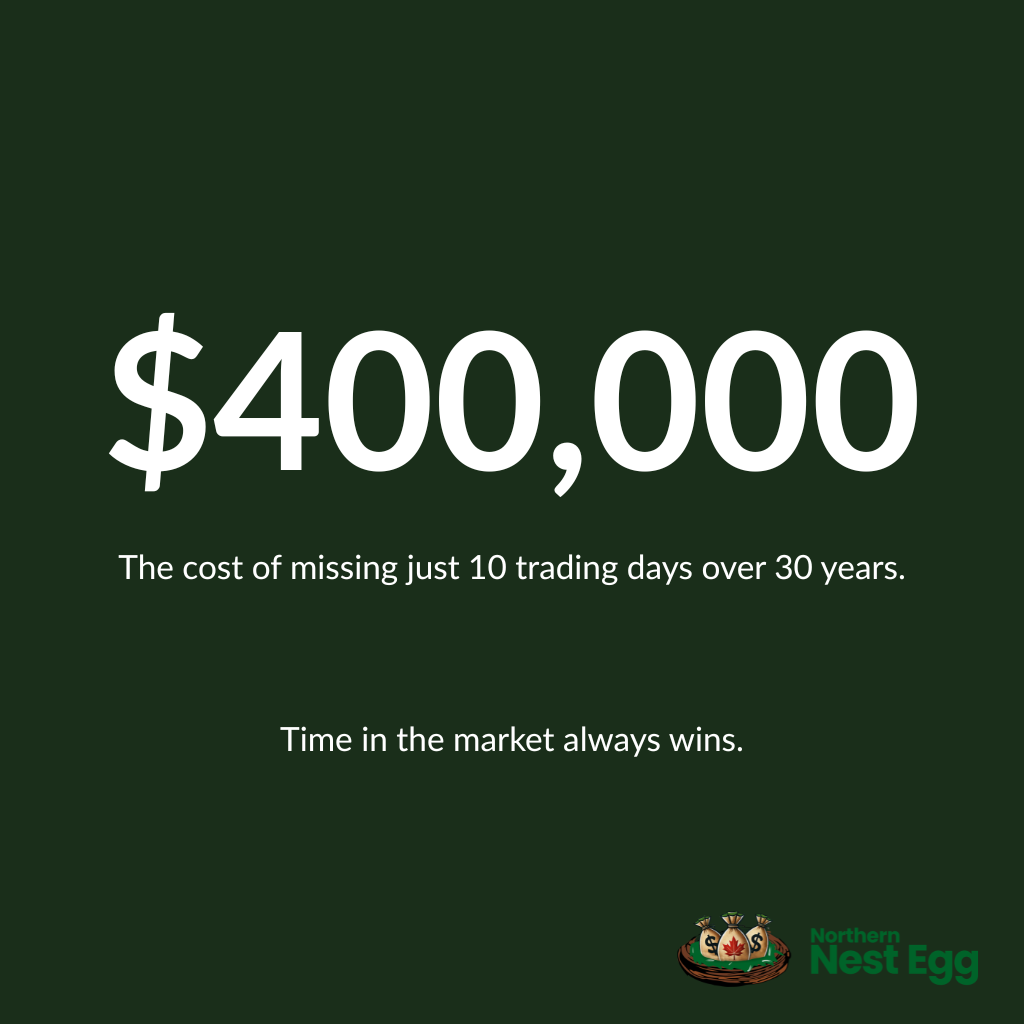
Trying to time the market requires getting two decisions right in sequence: when to exit and when to re-enter. Most investors get at least one wrong. Here is why staying invested in low-cost index ETFs consistently produces better long-term outcomes—and what the data actually shows.
Starting early gives young investors a powerful advantage. Here are five foundational principles to help Canadians build wealth, avoid costly mistakes and stay disciplined for the long term.
Northern Nest Egg helps Canadians build wealth through simple investing strategies, practical money habits and straightforward financial education.
Don’t miss our future updates! Get Subscribed Today!
© 2026 Northern Nest Egg. All Rights Reserved.